
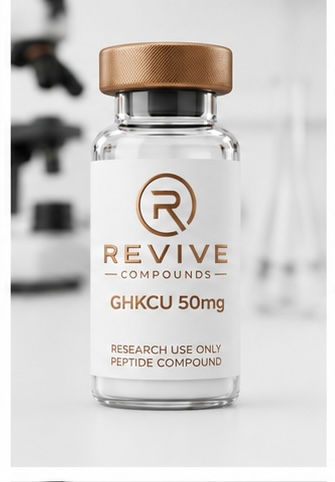
GHCKcu 50mg
Collagen and elastin synthesis. GHK-Cu stimulates fibroblasts to produce collagen and elastin, the proteins that give skin firmness and elasticity — the basis of its anti-aging skin use.
Skin remodeling. It supports the turnover and reorganization of the skin's extracellular matrix, which is tied to improvements in firmness, texture, and the appearance of fine lines.
Wound healing. GHK-Cu promotes the repair processes involved in healing, including angiogenesis and the recruitment of repair cells.
Hair follicle support. It has been studied for stimulating hair follicles and supporting hair growth.
Antioxidant and anti-inflammatory activity. GHK-Cu reduces oxidative stress and modulates inflammation, both relevant to skin aging.
The skin and wound-healing effects are supported by laboratory and topical research; the systemic effects of the injectable form rest on a thinner human evidence base.
Topical vs injectable
GHK-Cu is used in two forms, and they serve different purposes:
Topical (skincare). The most common use — GHK-Cu in serums and creams, applied to the skin for collagen support, firmness, and texture. This is the form behind the "glow peptide" and copper-peptide-serum interest. For routine-level context, compare it with other skin and hair peptides.
Injectable. Injectable GHK-Cu is not FDA-approved and is a separate risk category from topical cosmetic copper peptides.
For most people seeking the skin benefits, the topical route is the relevant one; the injectable belongs to a supervised protocol.
How it works
GHK-Cu works largely by delivering copper, an essential cofactor for the enzymes lysyl oxidase and others that cross-link and build collagen and elastin.
It also signals fibroblasts to produce more of those structural proteins and modulates genes involved in tissue repair, antioxidant defense, and inflammation. The net effect is a shift toward the skin's regenerative and remodeling pathways.
